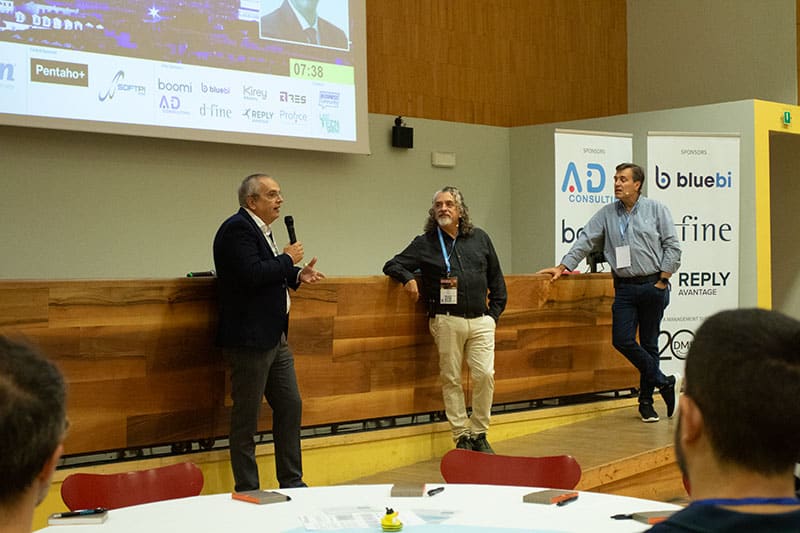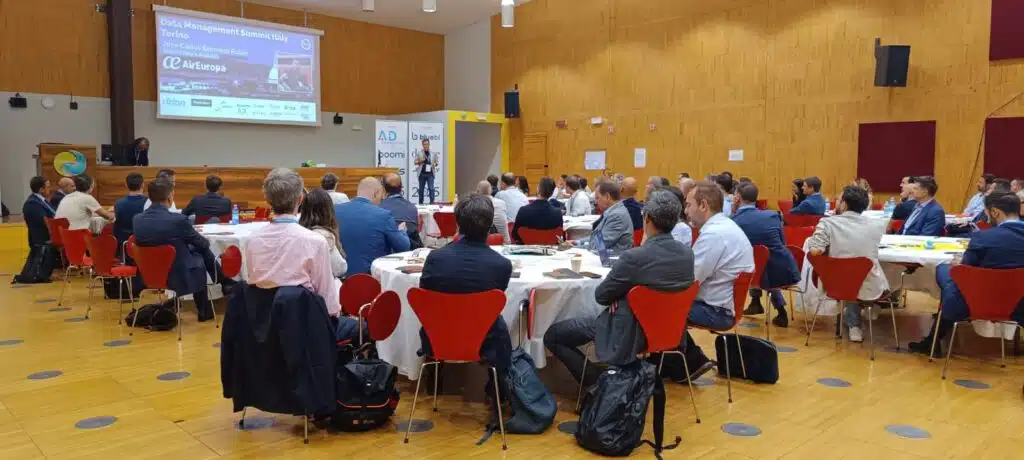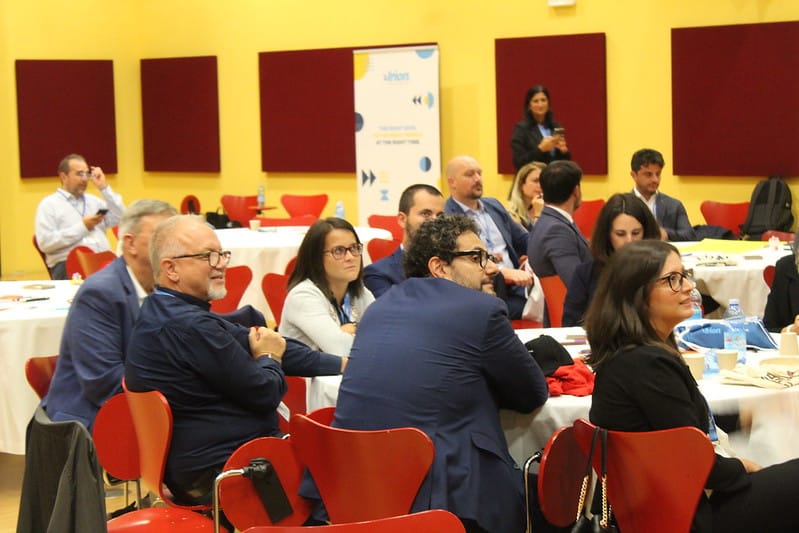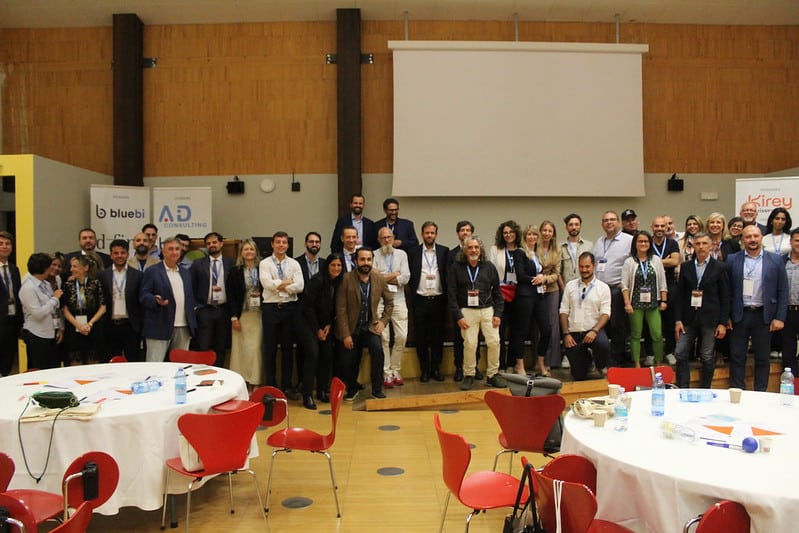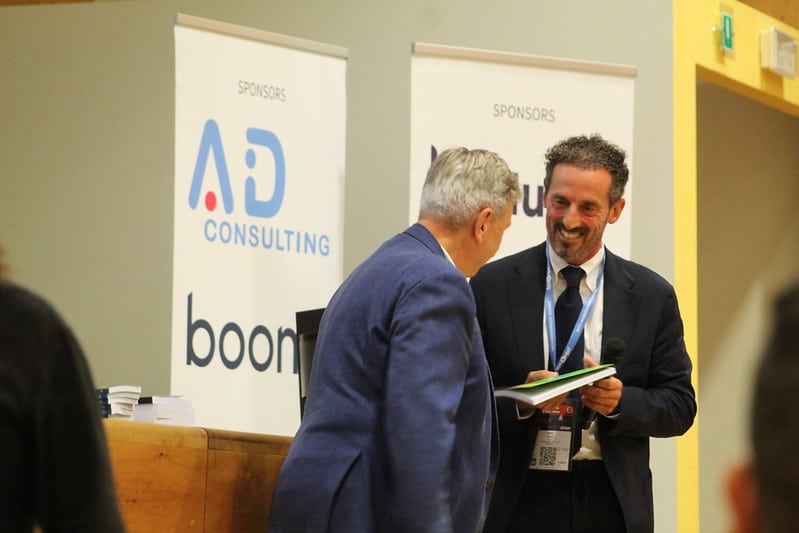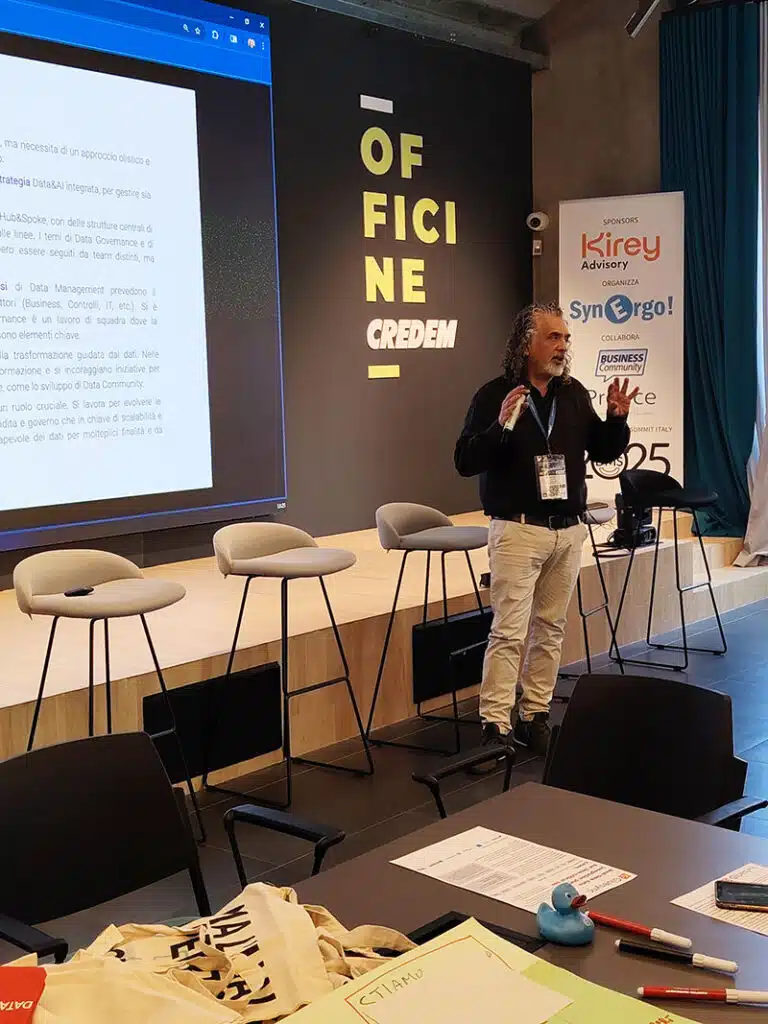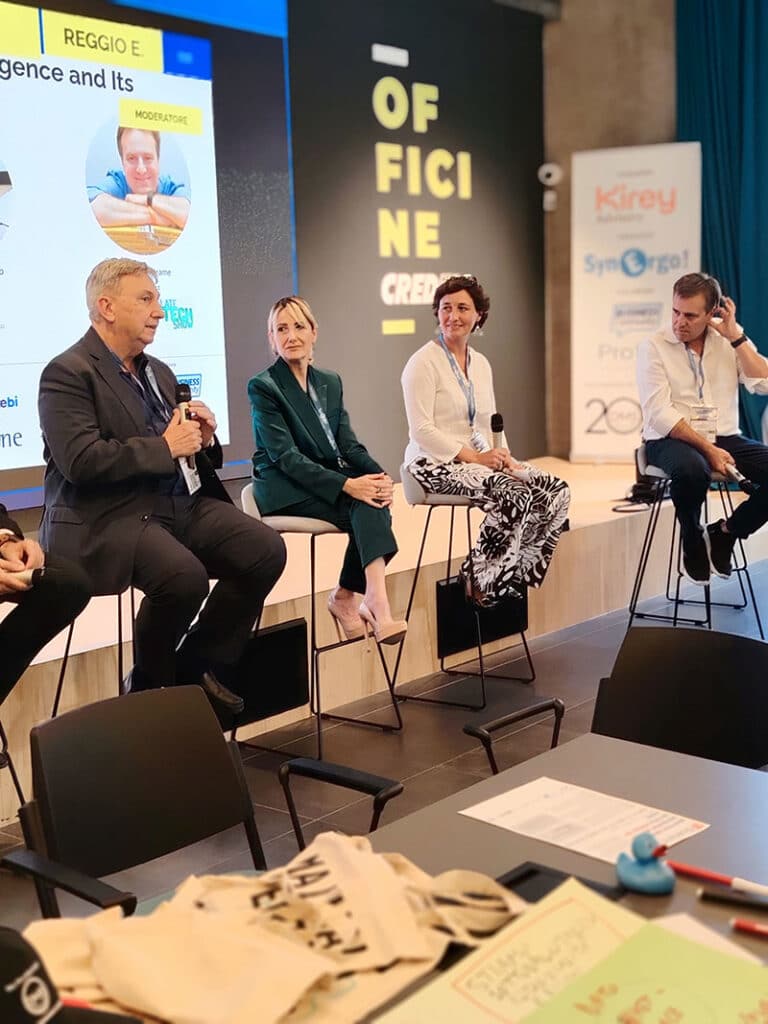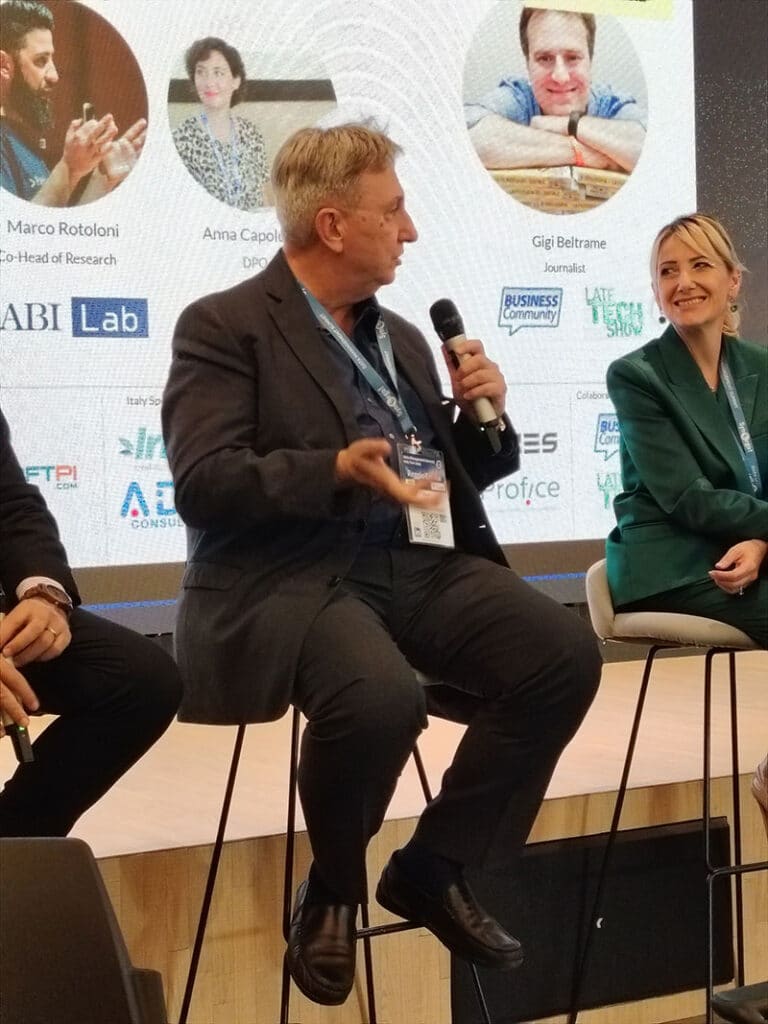

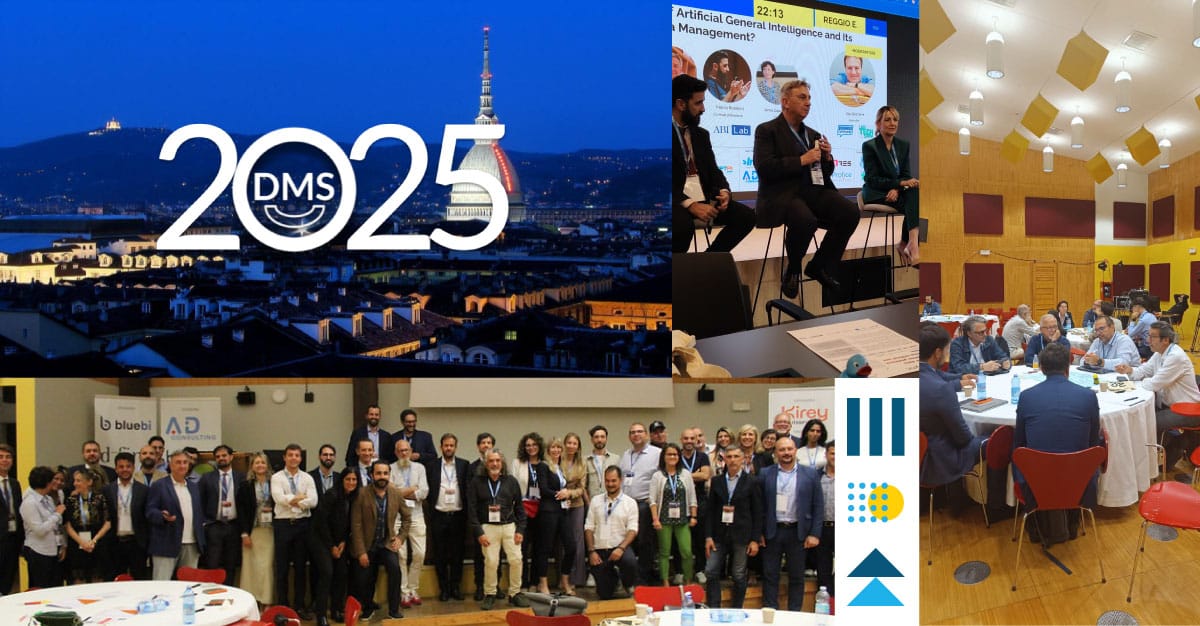
The first Turin edition of the Data Management Summit – with Irion as Venue Partner – confirmed a fundamental truth: artificial intelligence amplifies everything, including the need for solid data foundations. DMS 2025 made its debut under the Mole with over 90 professionals (plus streaming) gathered at the Environment Park, engaged in high-level round tables and talks, from discussions on Synthetic Data and on data architectures, through to Customer Value Management.
Irion’s CEO, Alberto Scavino, at the start of the day posed a crucial question (‘Whose data is it?’) and highlighted the growing regulatory pressure between DORA and other regulations, along with the need for a cultural response: a new shared responsibility in managing the company’s information assets.
Alice Lo Gioco and Salvatore Aufiero of Reale Mutua explained the benefits of a ‘Hub & Spoke’ architecture (like that of the Irion EDM platform): “With the creation of the Group-level CDO office, new needs arose. We have Irion as a Data Quality engine to produce results and statistics, and for Data Ingestion. And a business node in the frontend: any user of the Reale Group sees that interface. For us, this is very important to ensure standardization.”
The positive impact of the H&S model can be summed up in seven points, according to the two data leaders: in addition to standards, ‘decoupling’, centralization, simplification, a ‘holistic’ view of data, improved performance, and better management (scalability, maintenance, data observability).
Advanced Data Management: Taking Care of Context
“If the algorithm becomes increasingly powerful, then taking care of the context and the ecosystem that feeds it becomes even more important. Let’s go back to the fundamentals: data quality based on purpose, and the utmost attention. Not a generic quality. And governance. The metadata that enrich the context of the data itself are indispensable for algorithms: to be able to select, search for, and use the correct data,” explained Gabriele Seno, Product Advisory Director at Irion, in a round table discussion.
“We can launch many initiatives to centralize, create Data Catalogs, and promote Data Democratization with a Marketplace, but users are often drawn to the allure of quickly gathered data: today, Excel combined with ChatGPT can do a lot, including just as much damage! It’s better to provide a spreadsheet-like feeling, but within a platform capable of tracking everything and turning do-it-yourself into a centralized and managed version. It’s a way to collect contributions from the bottom up and bring them into order.” Seno described the idea of an agent that monitors incoming data over time and suggests changes or new rules to enrich the DQ dictionary: “Even just overcoming the blank-sheet syndrome gives us advantages and keeps humans at the center of the final decision.”
Irion’s Advisory Director, Mario Vellella, in the round table dedicated to BCBS 239 and regulatory developments, added: “Hub & Spoke has a very important meaning for us: Irion’s more than 20 years of experience in Data Quality and Governance has been distilled into this architecture. In the regulatory context, a platform must be flexible, provide a holistic view to Data Owners, and properly represent the data production process. With the Hub, we offer the best of metadata to understand what the control object is and how to orchestrate them. With the Spokes, we provide distributed engines with a high degree of freedom and flexibility, and we can also collect outputs from other technologies. We don’t need to replace everything.”
Data Management in Customer Care
In the case study presented by WindTre, the challenge of managing 30 petabytes of information and 20 billion interactions per day. What does this show? That ‘intelligent agents’ are not just hype if they rest on solid foundations of Enterprise Data Management. Advanced data management proves to be crucial to ensuring adequate Customer Care in such complex sectors: “We had 60,000 certified emails per month to read. Previously, operators had to manually search through repositories. Now we have structured the information content so that it can also be ‘digested’ by generative AI technologies”, said Chief Data Analytics Officer Marcello Savarese.
Now staff can report whether, in a certain area, a customer’s problem is due to an antenna outage, perhaps caused by bad weather. Key points: 90 data experts on staff, access to data without intermediaries, and profitability quintupled after one year.
At the forefront, in the case described, is also change management: as long as organizations do not ‘open up’ to greater trust, it is not possible to read data in a new way and carry out ambitious projects such as advanced analytics.