

Most organizations don’t suffer from a lack of data. They suffer from friction: long lead times to access the right dataset, uncertainty about definitions and ownership, repeated validation efforts, and a growing reliance on manual, one-off data deliveries.
When data stays trapped in silos, it remains a cost center. When it becomes shareable, trusted, and reusable, it becomes a strategic asset.
What is a Data Marketplace
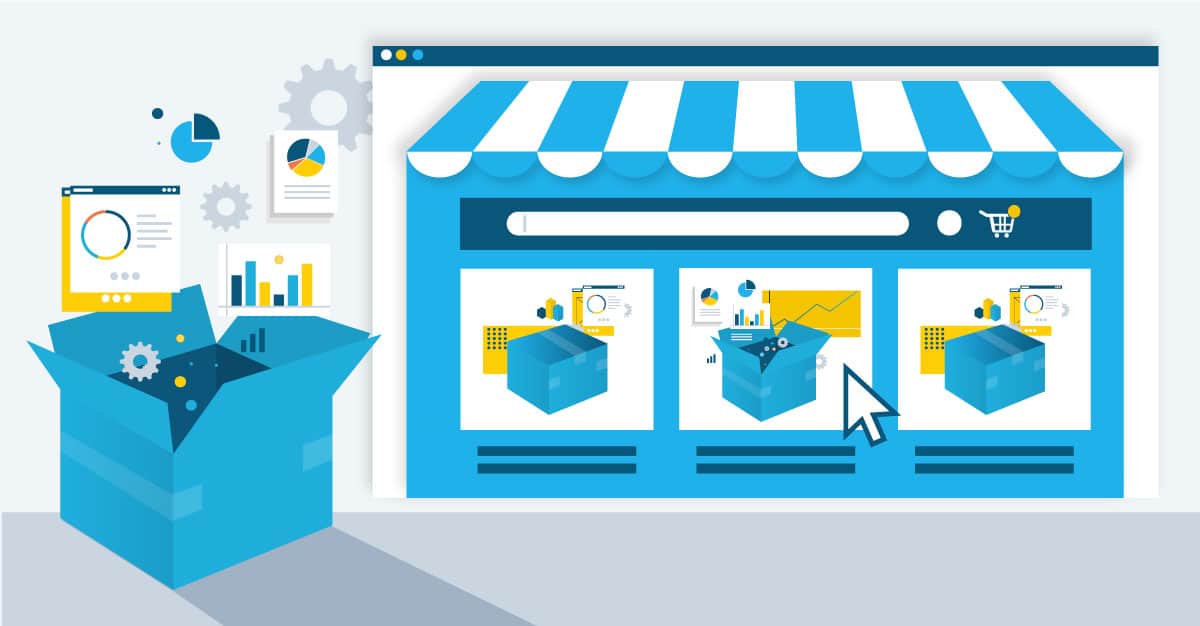
That’s the promise of a Data Marketplace. In practical terms, a Data Marketplace is a centralized environment, internal or external, where data producers publish Data Products (datasets, dashboards, APIs), and data consumers can discover, evaluate, and request them in a self-service way.
Internal and External Data Marketplace
There are two main directions: an internal Data Marketplace that helps break fragmentation and accelerates access across business units, and an external Data Marketplace that enables controlled sharing with partners, customers, or the public, often tied to monetization models and clear usage terms.
Data Product as the key to trust and reusability
But a Marketplace only works if trust is built in. Every Data Product must come with the context executives care about: meaning, ownership, intended use, plus transparency on quality and provenance, reducing the “transaction costs” between producers and consumers. This aligns with established data management principles: strong Data Governance and Metadata Management (including lineage/provenance and stewardship/accountability) are foundational to making data trusted and reusable at scale.
How to make a Data Marketplace work reliably
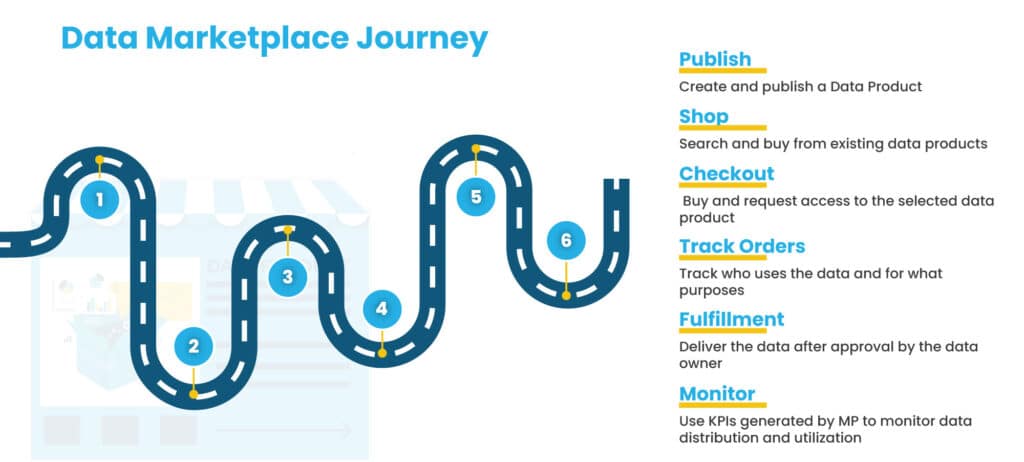
In our white paper, we also unpack what makes a Data Marketplace effective, with six practical characteristics (from openness and role-based access to KPI-oriented monitoring) and the operational journeys it enables:
Publish → Shop → Checkout → Track Order → Fulfillment → Monitor, including how users can request new Data Products when the right one doesn’t exist.
Why now? Because with AI, sharing data becomes an unavoidable evolution. The more self-service and governed your data distribution is, the faster your organization can innovate, without compromising compliance and accountability.